Ideas for glass wall / door to new annex please

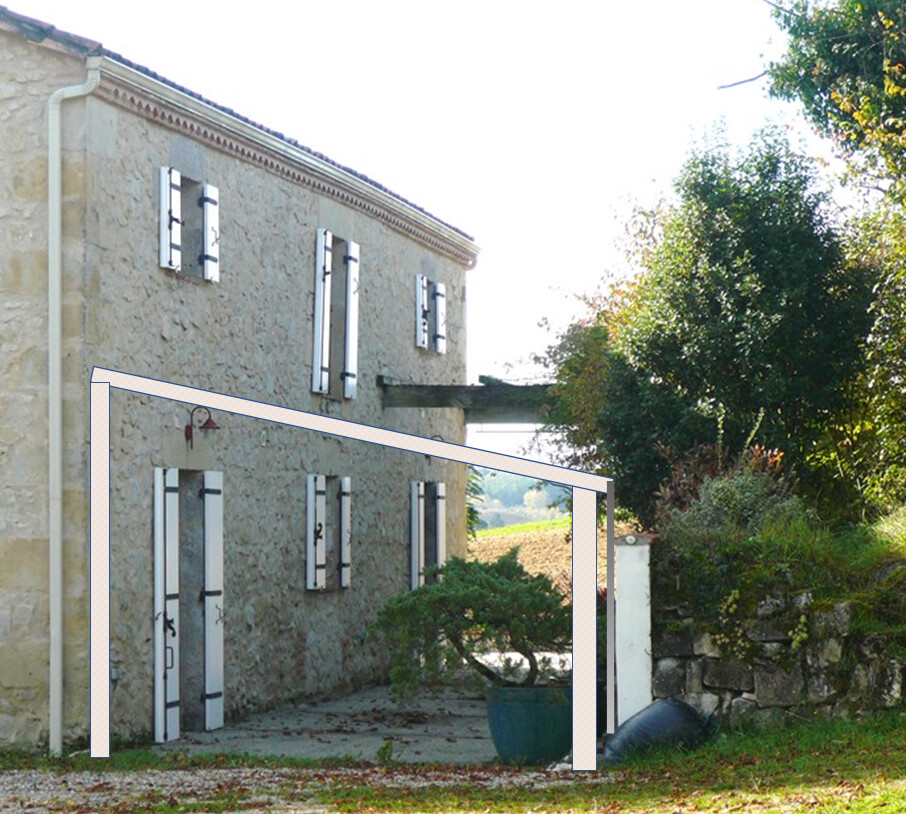
We are at the very early stage of a crazy idea, which is to roof over the terrace that runs the length of our cottage and turn the space into a lovely new gallery/living area.
The terrace is on the north side of the cottage so we need to maximise light (but NOT a glass roof). So we will install veluxes and along the top of the back wall there will be narrow windows.

This leaves us with the question what to do with the two end walls - one facing east, the other west. We want them to be mainly glass - triple glazed - and they will each need a door.

We are struggling to visualise what this will look like - all glass? partly masonry? Although the cottage is stone and very traditional, we’re anticipating that the annex will be modern looking.

Anyone any suggestions / thoughts please - or can show me where I might find them. Thanks

I would have a look at some "conservatory " websites to get some ideas. Personally, I would have thought a dwarf wall (protection against accidental damage) and glazed above, with the doors glazed to the same level would look best.

Looks like there’s trees around, you might need to consider how you will keep the house gutters clear

1 Like

You’re right Mark. In fact the existing gutter needs changing because there are supports going across the top of it - so it’s impossible to sweep or use a karcher system from either end.

Agree with Mark about the dwarf wall, I have seen a few summer rooms with glazing down to the ground with smashed panes due to a stone being kicked up by a lawnmower or strimmer, also a car clipping it turning one night.
We have a similar problem though ours is replacing an existing structures that was done in the seventies, our concervatory sits on top of the old farm above ground concrete sewage tank, 6 ft up.
All the double glazing seals have gone and are leaking/ filled with condensation, but the framework and roof are in good condition so I am going to take all the units out and replace them with new units from Leroy’s set into a frame and insulate the roof.
We were quoted €8k to do it but the units and roof replacement costs are €900 so I am doing it myself.

1 Like

Thanks Griffin, so useful to have this input - I love SF. I would never have thought of the low wall / protection thing.
Do you by any chance have a link to the Leroy units you are talking about please?

This is a bit too pvc for my taste, but shows how far you can push the idea of “conservatory”, until it is close to morphing i to an extension.

image|690x459

Look also at some of these ideas

Wood, pvc, aluminium whatever floats your boat, I am going for pvc as the concervatory is hidden at the back of the house where only the cows can comment on it :yum::grin:

https://www.leroymerlin.fr/produits/menuiserie/fenetre-et-porte-fenetre/

Thanks Jane and @Mark - just such a good idea - I’m downloading photos like mad! Lots to think about.

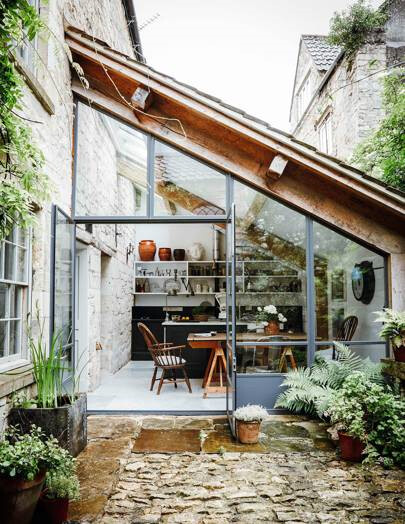
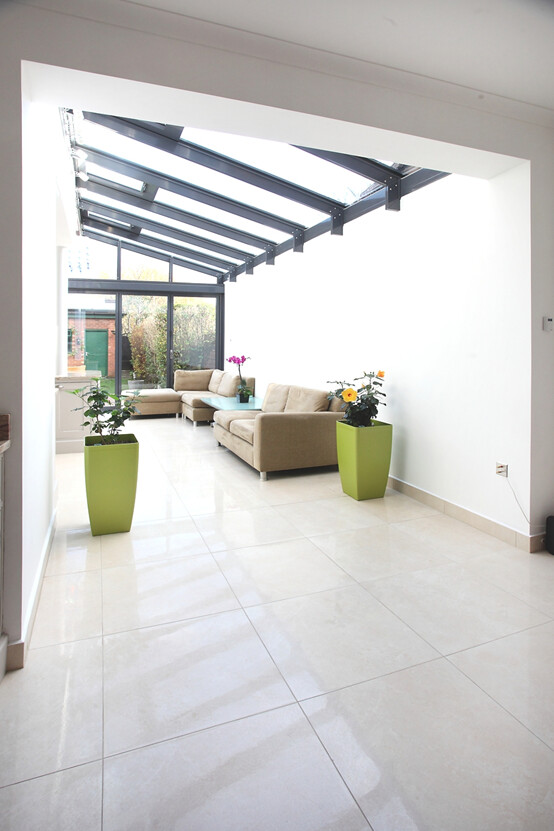
Somewhere between this, and this is what we’re looking for …

1 Like

Thanks Griffin - we don’t even have cows to comment!

I spent most of my working life in architectural design so will have lots of fun here, thank you Sue. I shall be scribbling sketchy stuff down on paper to ignite ideas out of this old brain! Can’t promise anything though!

Do you get early morning sun shining into the end facing east and sunset shining into the end facing west? Are there good views from both ends, worth enhancing from inside?

Would you be putting the veluxes over those 2 doors and the window on that back wall to maximise light into the rooms behind them? There will obviously be less light into those rooms once the terrace is roofed over, if you don’t want a glass roof.

1 Like

@Bonzocat Thanks so much for the questions. And would love to see any ideas you have.
Yes to the early morning / late afternoon/evening sun.
View to the west across terrace / small lawn then surrounding fields.

We imagine probably 3 veluxes at least. Two in line with the doors - good idea.

Nearest door is into the lounge. It will be more of a snug / TV room once the annex is built and an occasional downstairs guest bedroom, so loss of light not so much of a problem.

Furthest door is into the kitchen/dining. The cottage is only one room deep so there is a window on the other side of the kitchen (as, indeed in the lounge). We also have a large pergola on the terrace at the far end of the cottage (facing west) and through much of spring/summer /autumn most meals are outside. A shady / cool kitchen in high summer is a pleasure as is a cosy snug one in winter, so some loss of light feels ok.
We don’t want a glass roof because they are a nightmare to keep clean.

I think it might be best Sue, if I set out my thoughts and upload it as a Word document with questions, sketches or photos as well - as you’ve shown above.

Normally I would respond to a brief which clearly sets out your thoughts and feelings and ideas about what you want - use, colour, texture, materials, furniture, wall hangings – you name it, and so on. These will grow no doubt during the early stages of your crazy idea!

Your house looks similar to mine - thick stone-walled with red roman tiles on a low-pitched roof, with vertical shuttered windows. It has a recognizable integrity.

So, watch this space!

ps – clear glass windows down to the ground will pick up splashes and dirt at low level during wet weather, so the idea of a plinth wall with a stone sill, or something similar, is a good one.

1 Like

I am now getting verandah envy….ours is an ugly 25 year old PVC contraption that leaks heat like a sieve! Another project on the list….

1 Like

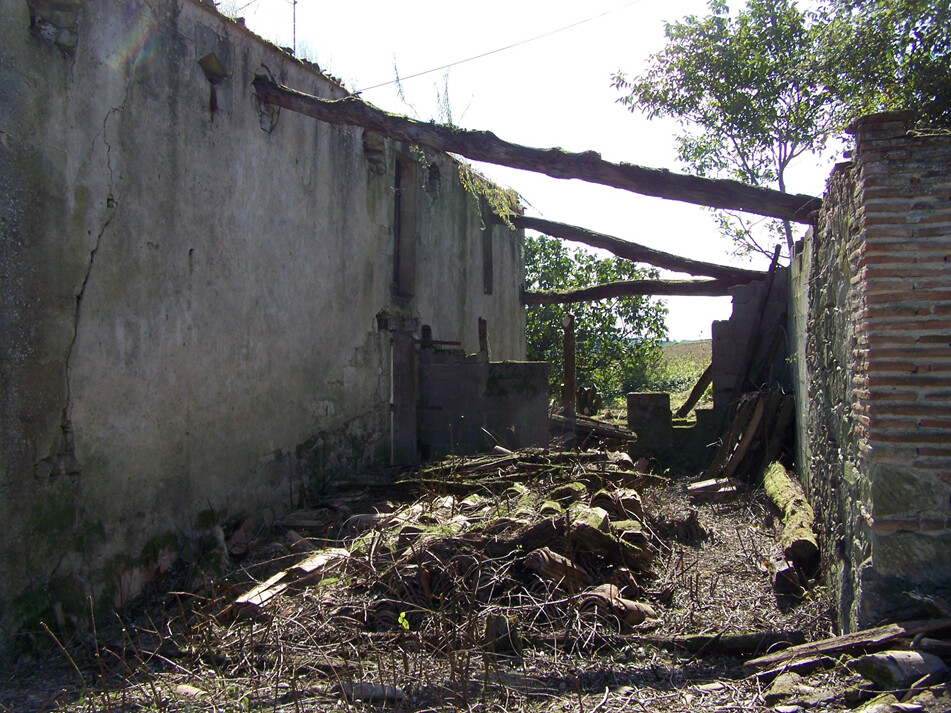
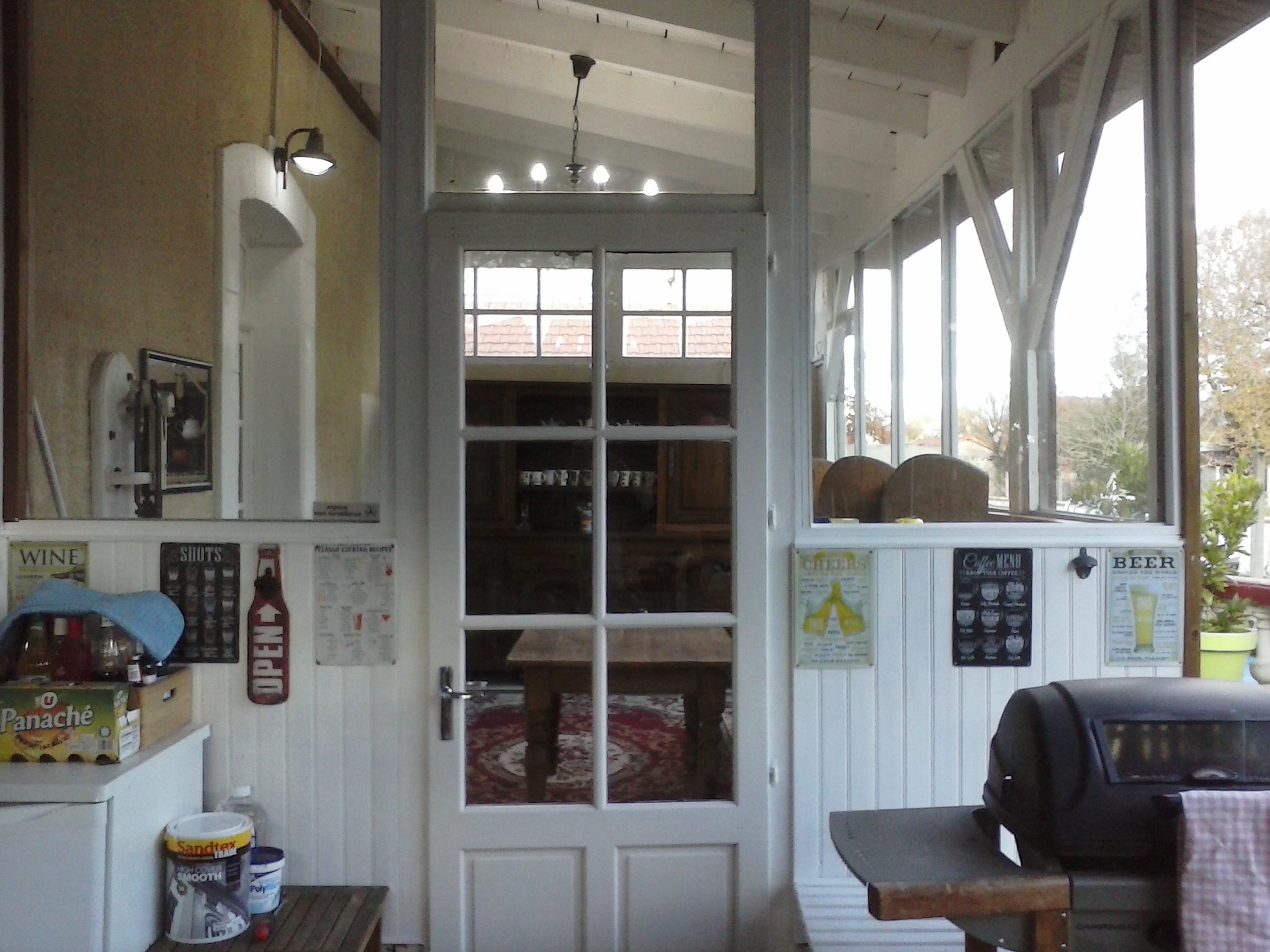
Thanks so much Bonzocat, that all sounds brilliant. Thought you might like to see … this is what the cottage at the bottom of the garden looked like when we first bought it and our house …

2 Likes

What fun - I LOVE projects. :grin:

I am planning on similarly replacing an old poorly constructed “single glazed porch” in a year or so, when I have completed our current major building works.

Since the overall height and width of glazing is within your control:

Opening glazed units: I priced made to measure double glazed replacement windows locally in the Jura, and winced at the cost. Then I bought standard sized timber framed double glazed opening patio door and window units from Leroy Merlin, and had the new door and window openings in our old stone walls made to measure instead. It was a lot cheaper to pay the masons to adjust the openings to a standard frame size. These Leroy Merlin units in fact come from Poland. I found them flimsy and constructed down to a price, however once fixed in place I am ok with them, although it took a lot of adjustment and tweaking to get them to be lined up completely true. The Polish suppliers (GORAN - Wooden windows and doors) do better quality units, some aimed at the german market, and if ordering enough it might still be cheaper to get a quote directly from Poland and pay for transport. (I ended up doing this for 300mm thick insulating blocks, which cost about 1/3 of the quotes I had from local building materials suppliers in the Jura including the cost of the lorry from Poland. The blocks are superior quality to those available in France as well.)

Fixed double glazing: Often the cheapest form of sealed toughened glass unit to buy in the UK are the standard sized replacement double glazed patio door panels. I plan to investigate where best to get these at the best price in France, but would search Ebay and LeBonCoin. These can be set into timber for the areas of fixed glazing. However there is likely to be differential movement between timber and glass so careful detailing of the setting and use of thixotropic sealant with a flexible backing strip is a good idea to avoid any force being exerted by the timber on the glass.

Odd Shapes: The cheapest approach that I can think of for the triangular glazing on the two ends is to use polycarbonate sheet that can be cut to size by hand, drilled and screw fixed. (tradenames of Lexan or Makrolon [Bayer] have good anti-abrasion properties, UV and discoloration resistance). In the UK I would have gone to a supplier like Sheffield Plastics and bought a couple of 2m by 1.2m sheets of about 6mm thickness. Now its been used so much for Covid screening this should be readily available locally in France. Before Covid I ended up buying it from Germany via Ebay, and paying shipping costs, still cheaper than I could find from French suppliers. Since this would involve creating your own double-glazing, the screwfixing gives the advantage of being able to open it up again if you get condensation inside, but ensuring you have warm fully dry air filling it should be achievable at the right time of year. Careful desgn of the roof pitch can ensure little or no wastage. I do have concerns about the use of plastics from the sustainability point of view, but I have equal concerns about the use of concrete. I think one has to minimise both.

Timber framing: Walter Segal, the architect evangelist for self-build, advocated designing the building to make use of whole timber sizes without any cutting or waste. This kept the cost down, and speeded construction. It’s worth looking at how he detailed timber frames and in particular clamped joints to make it easy for self builders. Segal Method - Designing Buildings. THE_SEGAL_METHOD.pdf (ianwhite.info) I would also use galvanised bolts. However for joints that I wished to remain rigidly fixed I would add Galvanised Steel Double Sided Tooth Plate Timber Connectors (these are available in the UK under brand names such as Sabrefix and Telco, from suppliers such as Screwfix… unfortunately I have not sourced any in France to date. I bought some from Amazon.fr, and they were too flimsy to use, so the metal thickness is critical to resist flattening when clamped up!) For my “porch” I will instead be trying to reuse timber beams from an outbuilding roof that I plan to take down, so that will dictate some of the sizes.

fenêtre de toit: I have fitted a number of Velux roof windows in the past, and I think that their brand and their flashing kits are very good, and make the task easy. However you are paying a premium for the brand, and there are a lot of cheaper alternatives, even from Leroy Merlin.

Avoiding summer time overheating: The deeper the timber fins that you construct sticking out beyond the line of glazing and the more that you have an effective shading roof overhang, the less likely is overheating. This can be modelled in ‘free to use’ software like Sketchup. where you can put in the latitude and longitude and study sunpath and shading through the seasons. Planting deciduous trees or considering projecting timber supports for deciduous creepers or vines can also be sensible to consider at this stage. Staff at Sussex University did an experimental study of the cooling effects of growing deciduous creeper over openable windows, and found it cooled significantly. There is a similar supposedly innovative study from TU Delft An experimental study of vertical greenery systems for window shading for energy saving in summer | TU Delft Repositories
2 Likes

Hello Jo, thank you for your detailed reply and your suggestions. Your approach is way beyond my pay grade! Local artisans will get the job and I will be happy to pay them for locally sourced materials, anything more complicated that that and I will get very anxious. :slight_smile:

Hi… It was not meant to be so intimidating!
I think the basic point is that the size and form that you ask the artisans to provide will affect the overall cost dramatically. So resolving the design before you start is key to controlling the costs. It depends on the artisans whether they can work to dimensioned drawings or instead construct their “interpretation” following their own custom and practice. Where it’s a matter of structural safety I have determinedly used local artisans, because I wanted to be bulletproof with regard to French building codes and French house insurance. As a result I know I have a lot lot more reinforced concrete than is necessary, ie their local custom and practice has altered the appearance of the old stonework, and not for the better… and this is despite a lot of discussion before they started work in order to agree the scope.
I note the various suggestions about dwarf walls at the foot, and personally would not be concerned about damage to glass extending down to floor level - if as is required that glass is toughened. I suspect choosing a dwarf wall will increase your costs. Any marking of the external surface of the glass close to the surface outside depends in the end on the overhang and shelter from rain provided by the roof and the type of surface that you create near the conservatory.

Best wishes
John

1 Like

Something similar to this?

Thanks for the thought Nigel but I’m looking for more light and feeling of space, so it’s important to have glass at both ends and the Veluxes and minimum distraction between.

And thanks for the extra comments John @JoCo

We’ve restored two properties here - the cottage and our main house and we’ve found people locally who are used to working with very old stone properties and all that that means. Reluctantly, we finally replaced the beautiful rippled wafer-thin single pane old glass large windows along the veranda of our house and had double glazing in wooden frames made specially (same with the cottage). Each window opening unique in size. But we think it’s worth it in order to maintain the character of the place.